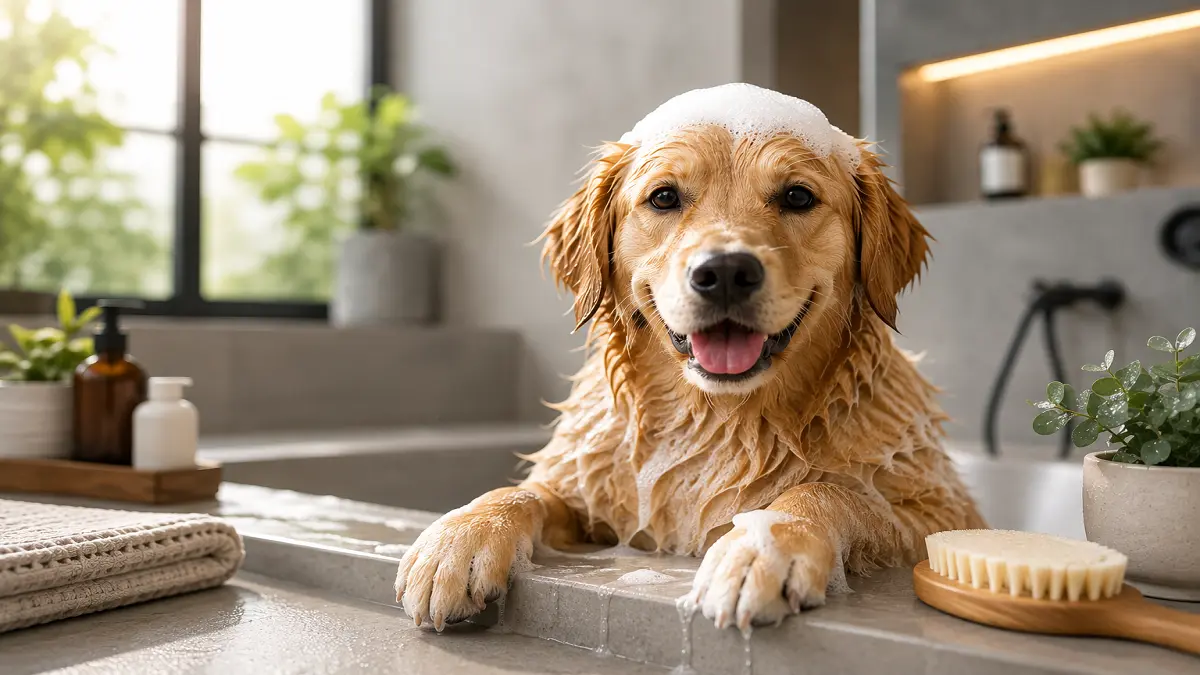
Most healthy adult dogs in the United States need a bath about once every four to eight weeks, although the right answer to how often you should bathe a dog depends on coat type, activity level, skin health, and age. Short-haired indoor dogs can often stretch to three months, while dogs with skin conditions may need medicated baths on a schedule set by a veterinarian.
If you have ever stood in the kitchen wondering whether that “dog smell” means bath time, you are not alone. About 65 million US households have a dog, according to the American Pet Products Association, and nearly every one of those owners asks the same question sooner or later. The internet does not help. One site says every week, another says twice a year, and your groomer says something else entirely.
Here is the truth. Bathing too often can strip natural oils and leave skin itchy and flaky. Bathing too rarely can trap dirt, allergens, and bacteria against the skin. The goal is a smart middle ground built around your dog, not a one-size-fits-all rule.
In this guide from Pawstori, you will learn a simple dog bathing schedule, what changes it, the warning signs to watch for, and a step-by-step method that makes bath time calmer for both of you.
How Often Should You Bathe a Dog? The Quick Answer
For a typical adult dog with a normal coat and healthy skin, a bath every four to eight weeks works well. Many low-maintenance dogs are perfectly happy with a bath every two to three months. That range is a starting point, not a strict rule.
Use this simple rule of thumb to get started.
- Short, smooth coats usually do well with a bath every six to twelve weeks.
- Double coats and long coats often need a bath every four to eight weeks, with regular brushing in between.
- Dogs with skin issues should follow the schedule your vet gives you, which can be more frequent.
Your dog’s nose and eyes will tell you more than the calendar. If your dog smells, looks greasy, or is rolling on the carpet to scratch, it may be time, even if you are early.
What Affects How Often You Should Wash Your Dog
Two dogs living in the same house can need very different bath schedules. These are the main factors that change the answer.
Coat Type and Length
Dogs with oily coats, such as Basset Hounds and Cocker Spaniels, tend to get smelly faster. Curly-coated breeds like Poodles and Doodles trap dirt and shed hair in their curls, so they benefit from regular baths and grooming. Thick double coats, like those on Huskies and Golden Retrievers, hold dirt deeper but repel it well, so they often need fewer baths and more brushing.
Lifestyle and Activity Level
A dog who swims in lakes, hikes muddy trails, or visits the dog park every weekend will need more baths than a couch-loving apartment dog. Indoor dogs pick up less dirt, but they still collect dander, saliva, and everyday oils on their coats.
Skin Health and Allergies
Dogs with seasonal allergies, dry skin, or yeast and bacterial problems often need special shampoos and a tailored schedule. If you notice constant scratching, red patches, or a musty odor, learn more about dog skin health and book a vet visit before changing your routine on your own.
Age and Life Stage
Puppies have delicate skin and usually only need a bath when they are truly dirty, and only after your vet says it is safe. Older dogs may have drier skin, stiff joints, and less patience for long baths. For gentle routines and comfort tips, explore our senior dog care resources.
Dog Bathing Frequency Chart by Coat Type
Use this table as a quick reference. Adjust it based on your dog’s lifestyle and your vet’s advice.
| Coat Type | Common Examples | Suggested Bath Frequency |
| Short and smooth | Beagle, Boxer, Pit Bull, Dachshund | Every 6 to 12 weeks |
| Double coat | Husky, Golden Retriever, German Shepherd | Every 6 to 8 weeks, brush often |
| Long and silky | Shih Tzu, Maltese, Yorkshire Terrier | Every 3 to 4 weeks |
| Curly or wavy | Poodle, Goldendoodle, Bichon Frise | Every 4 to 6 weeks with grooming |
| Wrinkled or oily | Bulldog, Basset Hound, Pug | Every 3 to 4 weeks, dry skin folds well |
| Hairless | Chinese Crested, Xoloitzcuintli | Weekly or as advised by your vet |
| Puppies under 6 months | All breeds | Only when needed, ask your vet first |
What Happens If You Bathe Your Dog Too Often
It is tempting to bathe a dog every week to keep things fresh, but healthy skin relies on a thin layer of natural oils. Frequent shampooing can wash those oils away. Dog skin is also more sensitive than human skin, so even gentle products can cause trouble when overused.
Watch for these signs of over-bathing.
- Dry, flaky skin or visible dandruff
- A dull, brittle coat that tangles easily
- More scratching or licking after baths
- Red, irritated patches on the belly or armpits
If you see these signs, stretch the time between baths and ask your vet about a moisturizing shampoo.
What Happens If You Do Not Bathe Your Dog Enough
Skipping baths for months can cause its own problems. Dirt, oil, and dead hair build up and can clog pores. Allergens such as pollen and dust stay on the coat, then travel to your couch and your bed. Over time, that buildup can contribute to odor, matting, and skin infections.
Regular baths also give you a chance to check your dog from nose to tail. You may spot lumps, ticks, hot spots, or fleas early, which makes treatment simpler and often less expensive.
Signs Your Dog Needs a Bath Right Now
Not sure whether it is time? If you notice any of the following, a bath is probably overdue.
- A strong smell that returns soon after you air out the room
- A greasy feel or visible dirt on the coat
- Mud, sand, or pond water after outdoor play
- Dander or shedding that seems heavier than usual
- Your dog has rolled in something unpleasant, which every owner has seen at least once
How to Bathe a Dog the Right Way
A good bath routine protects your dog’s skin and keeps stress low. Many dogs also relax faster when owners stay calm and use the same handling habits they practice in daily dog training tips.
Before the Bath
Brush your dog first to remove loose hair and mats, because water tightens mats and makes them harder to remove. Gather shampoo, towels, a cup or sprayer, and treats before your dog gets wet.
During the Bath
- Use lukewarm water. Hot water can irritate skin.
- Wet the coat thoroughly, starting at the neck and working back.
- Apply a dog-specific shampoo and massage it in gently. Avoid human shampoo, since dog skin has a different pH balance.
- Keep soap and water out of the eyes, ears, and nose.
- Rinse longer than you think you need to. Leftover shampoo is a common cause of itching.
After the Bath
Towel dry well, then use a low-heat dryer if your dog tolerates it. Damp coats can lead to hot spots and musty smells, especially on thick-coated breeds. Finish with a treat and some praise so bath time becomes something your dog looks forward to.
How to Keep Your Dog Fresh Between Baths
You can stretch your bath schedule safely with a few easy habits.
- Brush your dog several times a week to spread natural oils and remove dirt
- Use dog-safe grooming wipes on paws, belly, and face after walks
- Wash dog bedding and blankets every one to two weeks
- Clean ears, teeth, and paws regularly, because they cause a lot of doggy odor
These small steps keep your home cleaner and protect your dog’s coat. For more routines like these, browse our dog care guides section.
Common Questions About Bathing Your Dog
How often should you bathe a puppy?
Puppies only need a bath when they are dirty, and a gentle wipe-down often does the job. Ask your vet when your puppy can start baths and which shampoo to use.
Is it okay to wash my dog every week?
For most dogs, weekly baths are too much. Some dogs with medical skin conditions are an exception, but only under veterinary guidance.
Do indoor dogs need fewer baths?
Often yes. Indoor dogs usually stay cleaner, so a bath every two to three months may be enough. Regular brushing still matters.
Should I bathe my dog more in summer?
Many owners bathe a little more in warm months because of swimming, sweat, and outdoor play. Keep the shampoo gentle and rinse with plain water when you can.
Is it better to use a groomer or bathe at home?
Both work. Home baths are budget friendly and build trust. Professional groomers are helpful for large breeds, heavy coats, matting, or dogs who dislike water.
Can I use human shampoo on my dog?
It is best to avoid it. Human products are made for a different skin pH and can dry out or irritate your dog’s skin. Choose a dog-specific formula, or a medicated one if your vet recommends it.
When to Talk to a Vet or Groomer
Call your vet if your dog has constant itching, hair loss, open sores, a strong yeasty smell, or skin that stays red after bathing. These are signs that something other than dirt is going on. A groomer can help with heavy shedding, tangled coats, and nail or ear care that make bath time safer and easier.
Final Thoughts on How Often You Should Bathe a Dog
So, how often should you bathe a dog? For most healthy adults, every four to eight weeks is a safe starting point, with changes for coat type, lifestyle, and skin health. Watch your dog, trust your nose, and adjust slowly. A calm routine, the right shampoo, and regular brushing do more for your dog’s comfort than any strict calendar.
Healthy habits start with good information, and that is what Pawstori is here to share. Every guide we publish is written to help US dog owners make confident, practical choices at home.