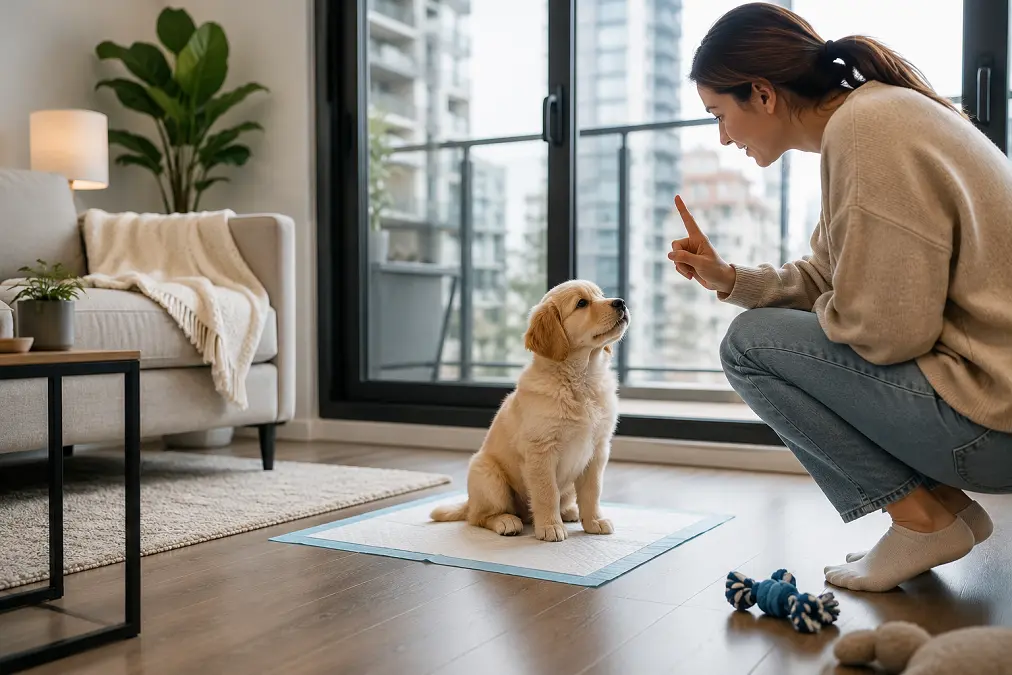
To potty train a puppy in an apartment, pick one consistent potty spot, take your puppy there every 1 to 2 hours plus after meals, naps, and play, and reward success within three seconds. Pair that routine with a properly sized crate for rest time and calm, consistent cleanup of accidents. Most puppies show real progress in 2 to 4 weeks and become reliable between 4 and 6 months, though small breeds and busy city households can take longer.
If you live in a studio, a walk-up, or a 20th-floor high-rise, you already know the problem. There is no backyard to open the door to, the elevator takes forever, and your puppy only gives you about ten seconds of warning. Every accident feels like a setback, and your neighbors are probably hearing more whining than you’d like.
The good news is that apartment life can actually make housebreaking easier. Smaller spaces are easier to supervise, and a tight routine is simple to build. This guide walks you through a clear, step-by-step plan, from gear and schedules to nighttime breaks, pad training, and what to do when things go wrong. It is written for US apartment dwellers, so it covers real situations like elevators, shared lobbies, balconies, and winter weather.
Why Potty Training a Puppy in an Apartment Feels So Hard
Most apartment owners struggle for the same few reasons, and none of them are your fault. Understanding them is the first step to fixing them.
The Most Common Pain Points
- No direct yard access. You have to leash up, lock the door, and travel to the potty spot every time.
- Tiny bladders. A young puppy can only hold it for roughly one hour per month of age, which is a common rule of thumb among trainers and vets.
- Mixed signals. Pads, grass, and walks outside can confuse a puppy if the rules keep changing.
- Noise and neighbors. Crying in a crate or barking at the door can stress you out fast.
- Work schedules. Long gaps alone make accidents almost guaranteed.
What Actually Works
Puppies learn through repetition and timing, not through size of space. Consistency, supervision, and quick rewards beat every gadget on the market. If you want to go deeper after this guide, our puppy training section covers related skills like crate comfort, leash manners, and basic cues.
Gear You Need Before You Start Apartment Puppy Potty Training
You don’t need a cart full of products. A short, practical setup is enough to start well.
- A correctly sized crate. Big enough to stand and turn around, but not big enough to use one corner as a bathroom.
- Enzymatic cleaner. Regular cleaners leave odor traces that draw your puppy back to the same spot.
- High-value treats. Tiny, soft, and easy to carry in your pocket.
- A leash and waste bags. Keep them by the door so you can move fast.
- Optional indoor option. Puppy pads, a turf patch, or a balcony potty tray if outdoor access is slow.
Keep the gear simple and see how your puppy responds before adding anything else.
How to Potty Train a Puppy in an Apartment Step by Step
Step 1 Choose One Potty Spot and Stick With It
Pick a single location, either outside near your building or on a designated indoor surface. Take your puppy to the exact same area every time. The scent builds a powerful cue, and your puppy learns that this spot means business. Avoid changing the spot during the first few weeks.
Step 2 Build a Predictable Potty Schedule
A good puppy potty schedule is the backbone of housebreaking. Take your puppy out first thing in the morning, after every meal, after naps, after play, and right before bed. Use the table below as a starting point, then adjust to your own puppy.
| Puppy Age | Approx. Hold Time | Suggested Potty Breaks |
| 8 to 10 weeks | 1 to 2 hours | Every 45 to 60 minutes while awake, plus 1 or 2 overnight breaks |
| 3 to 4 months | 3 to 4 hours | Every 1.5 to 2 hours while awake, plus 1 overnight break |
| 4 to 6 months | 4 to 6 hours | Every 2 to 3 hours while awake, with fewer night breaks |
| 6 months and up | 6 to 8 hours | Every 3 to 4 hours, based on activity and diet |
These are general guidelines. Every puppy is different, so use them as a starting framework and not a strict rule.
Step 3 Use the Crate the Right Way
Dogs naturally avoid soiling the place where they sleep, which makes crate training one of the most effective tools for apartment housebreaking. Use the crate for naps, short absences, and overnight rest. Never use it as punishment, and don’t leave your puppy inside longer than they can physically hold it.
Step 4 Reward Immediately
Timing matters more than anything. Praise and treat your puppy within three seconds of finishing, and do it at the potty spot, not after you walk back inside. Your puppy connects the reward with the action, and the behavior sticks faster.
Step 5 Add a Cue Word
Say a simple phrase like “go potty” in a calm voice as your puppy starts to go. After a couple of weeks, your puppy will begin to associate the phrase with the action. This is a lifesaver on rainy mornings and in crowded lobbies.
Outdoor Training vs Pad Training for Apartment Puppies
One of the biggest questions apartment owners ask is whether to use pads or take their puppy outside every time. The honest answer is that it depends on your building, your schedule, and your long-term goal.
| Factor | Outdoor Training | Pad or Indoor Training |
| Best for | Ground-floor or easy outdoor access | High-rise living, very small breeds, long work hours |
| Pros | One clear habit, no transition later | Convenient in bad weather and at night |
| Cons | Requires frequent trips, tough in winter | Can blur the line between indoors and outdoors |
| Tip | Use the same door and route every time | Place the pad in one fixed spot and shrink it over time |
If your long-term goal is walks only, go outdoors from day one and use pads only as a backup. If you plan to keep an indoor option, be consistent and don’t switch back and forth every few days.
Potty Training a Puppy in a High-Rise or Walk-Up Apartment
Living on a higher floor adds a few extra hurdles, but they are easy to manage with some planning.
- Carry small puppies to the elevator and down to the street, since they can’t always hold it long enough to walk.
- Keep the leash and treats by the door so you can leave in seconds when your puppy gives a signal.
- Learn the signs. Circling, sniffing, whining, or sudden stopping usually means it’s time.
- Consider a balcony turf patch if your building allows it and you need a backup for storms or late nights.
Check your lease and building rules about balconies and pet waste areas. Being a considerate neighbor also keeps your building happy and your puppy welcome.
How Long Does It Take to Potty Train a Puppy in an Apartment
Most owners see early success in about 2 to 4 weeks with a strict routine, but full reliability usually arrives between 4 and 6 months. Some toy breeds and rescue puppies take closer to a year. Progress is rarely a straight line, and a few accidents during growth spurts, teething, or changes in routine are normal.
What speeds things up is simple. Supervise closely, keep a regular feeding schedule, and celebrate wins. What slows things down is inconsistency, long unsupervised stretches, and punishing accidents.
Nighttime Potty Training for Apartment Puppies
Young puppies can’t sleep through the night at first, and that’s perfectly normal. Pick up the water bowl about an hour before bed, take your puppy out right before sleep, and set a quiet alarm for one or two overnight breaks in the early weeks. Keep these trips calm and boring with no play, no lights, and no long chats. As your puppy grows, stretch the time between breaks slowly.
What to Do When Accidents Happen
Clean Thoroughly and Calmly
Blot the area, then use an enzymatic cleaner to break down the odor. Skip ammonia-based products, since they smell like urine to dogs and can make the problem worse.
Never Punish Your Puppy
Scolding or rubbing a nose in the mess teaches fear, not control. Puppies that fear punishment often hide to go potty, which makes apartment training much harder. If you catch your puppy in the act, calmly interrupt, carry them to the potty spot, and reward if they finish there.
Know When to Talk to Your Vet
If your puppy has frequent accidents, strains, cries while peeing, or seems to be going far more often than usual, a medical issue may be involved. Our dog health articles can help you spot common concerns, but your veterinarian should always make the call.
Common Mistakes to Avoid When Housebreaking in an Apartment
- Giving too much freedom too early. Use gates or a pen to limit the space.
- Changing the potty spot or route every few days.
- Skipping the post-meal and post-nap breaks.
- Waiting for the puppy to ask. Most young puppies can’t signal reliably yet.
- Ending training too early. Keep the routine going for weeks after the last accident.
For more everyday guidance on raising a happy, healthy pup, browse our dog care resources.
Frequently Asked Questions About Apartment Puppy Potty Training
Can you potty train a puppy in an apartment with no yard?
Yes. Many city dogs are fully housebroken without ever having a yard. A fixed routine, a consistent potty spot, and close supervision matter far more than outdoor space.
Should I use puppy pads in my apartment?
Pads are a useful tool for high-rise living, bad weather, and very young puppies. Just keep the pad in one place, and decide early whether you want to phase it out.
How often should an apartment puppy go out?
Young puppies need a break roughly every 45 to 60 minutes while awake, and after every meal, nap, and play session. The gap grows as your puppy matures.
Why does my puppy still have accidents after weeks of training?
Common causes include too much freedom, inconsistent schedules, leftover odors, or a medical issue. Tighten the routine for a week or two and check with your vet if the problem continues.
What is the fastest way to potty train a puppy in an apartment?
There is no shortcut, but the fastest path is a strict schedule, crate rest, instant rewards, and zero punishment. Consistency in the first two weeks sets the tone for everything after.
Final Thoughts on How to Potty Train a Puppy in an Apartment
Learning how to potty train a puppy in an apartment comes down to a handful of habits. Choose one potty spot, keep a predictable schedule, use the crate wisely, reward fast, and stay patient through the setbacks. Apartment life isn’t a barrier. With the right routine, your puppy will learn quickly, and your home will stay clean, calm, and neighbor-friendly.
You don’t have to figure it all out alone. Join the pack at Pawstori for one practical field note a week, with straight advice on training, health, and everyday pet life. Have a specific question about your puppy or your building? Contact us and tell us what you’re dealing with. Your first clean week is closer than you think.